Stress test


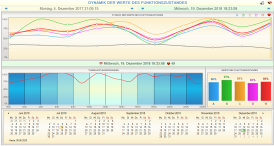
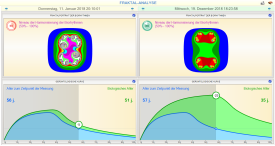
The measurement of heart rate variability (HRV: Heart Rate Variability, with Nilas MV®) was also developed for space travel to test the influence of stress on the organ system. This takes advantage of the fact that both the autonomic nervous system and feelings as well as the control of the brain influence the heart rate. When you are happy, your heart “beats faster”; when you meditate, your heart rate can be reduced to a minimum. During an exam, “your heart beats in your throat” even though you are sitting there quietly. We know from the seriously ill patients in the intensive care unit that if a fixed heart rate occurs, they die within a few days because the heart no longer has the ability to adapt to different circumstances. The scientists have developed a program that can provide information about the following by analyzing the change in heart rate over time, measured by applying two clamp electrodes to the wrists:
To be more precise: Anyone who puts too much strain on themselves at work and in their free time loses the energy they need to regenerate the body's cells and therefore ages biologically. On the other hand, those who manage to compensate for stressful situations at work, in the family or in their free time are likely to keep their bodies in such good condition that their biological age is significantly lower than their real age. Our test shows you how high your stress level is and how well your organism can compensate for stress to keep it biologically young. Measuring heart rate variability is not a basic service of statutory health insurance. Therefore, it cannot be billed through health insurance companies. |
|
→ |
|
|