Laboratory tests

-
Sonography
-
Blood Tests
-
Stool Tests
Ultrasound of the Abdominal Organs:
Tumors, chronic diseases of the organs, kidney stones, calcifications and dilation of the abdominal aorta and the effects of obesity can be detected in the early stages without radiation exposure such as in a computer tomography scan.
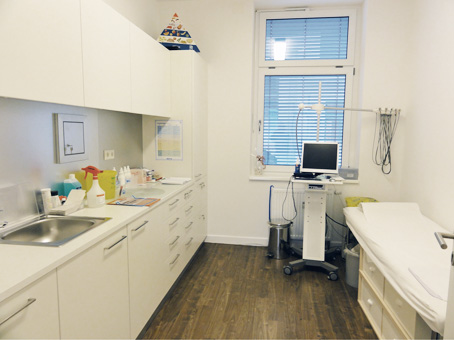
Ultrasound of the Carotid Arteries:
Changes in blood flow and vessel walls, caused by factors such as high cholesterol and nicotine consumption, can be detected at an early stage, before a narrowing of the arteries leads to a stroke. Furthermore, the thickness of the carotid artery walls can provide information about calcification of the coronary arteries. Strict management of risk factors can prevent complications such as a stroke. Smokers, those over 40, and patients with diabetes, high blood pressure, or high cholesterol particularly benefit from this examination.
Ultrasound of the Veins:
The venous valves can be tested for proper closure. Prolonged standing and sitting at work can lead to dilation of the venous valves, resulting in varicose veins and painful leg swelling. Preventive measures can then be initiated immediately.
|
→ |  |
|

Risk of Thrombosis:
If there is a history of thrombosis or pulmonary embolism in a family, hereditary changes in the structure or quantity of clotting factors are usually responsible. These changes can be easily identified with a coagulation analysis. This test is particularly useful for relatives from such a family, or for women who smoke, take birth control pills, or are pregnant. This is because a familial clotting disorder, especially in combination with these factors, can lead to thrombosis.
Risk of Arteriosclerosis:
A simple blood test, pulse check and blood pressure measurement in the arms and legs can be used to estimate your individual risk of heart attack, stroke and amputation due to circulatory disorders.
HIV test/Hepatitis Serology:
HP Test:
Within minutes, a specific antibody test can detect whether the pathogen Helicobacter pylori is the cause of your persistent stomach pain, such as belching or stomach pressure.
PSA:
It can provide information about prostate cancer.
Early Detection of Osteoporosis:
A blood test can detect a bone metabolism disorder. Recommended from age 40.
|
→ | |
|
FOB Test
The currently standard tests for blood in stool have a detection rate of 50-60% and the test result can be influenced by food and medications. A new test method (FOB test) using specific antibodies is much more sensitive and less prone to interference, so that up to 90% of patients with colorectal cancer can be detected.
|
→ |
|
|